
Product Engineering · Aug 25, 2026 · 7 min read
A digital product development process that stays visible from idea to launch
A product process is useful when every week produces a decision, a demo, or a risk you can act on. Here is the sequence we use.
By PKT Info Tech
Views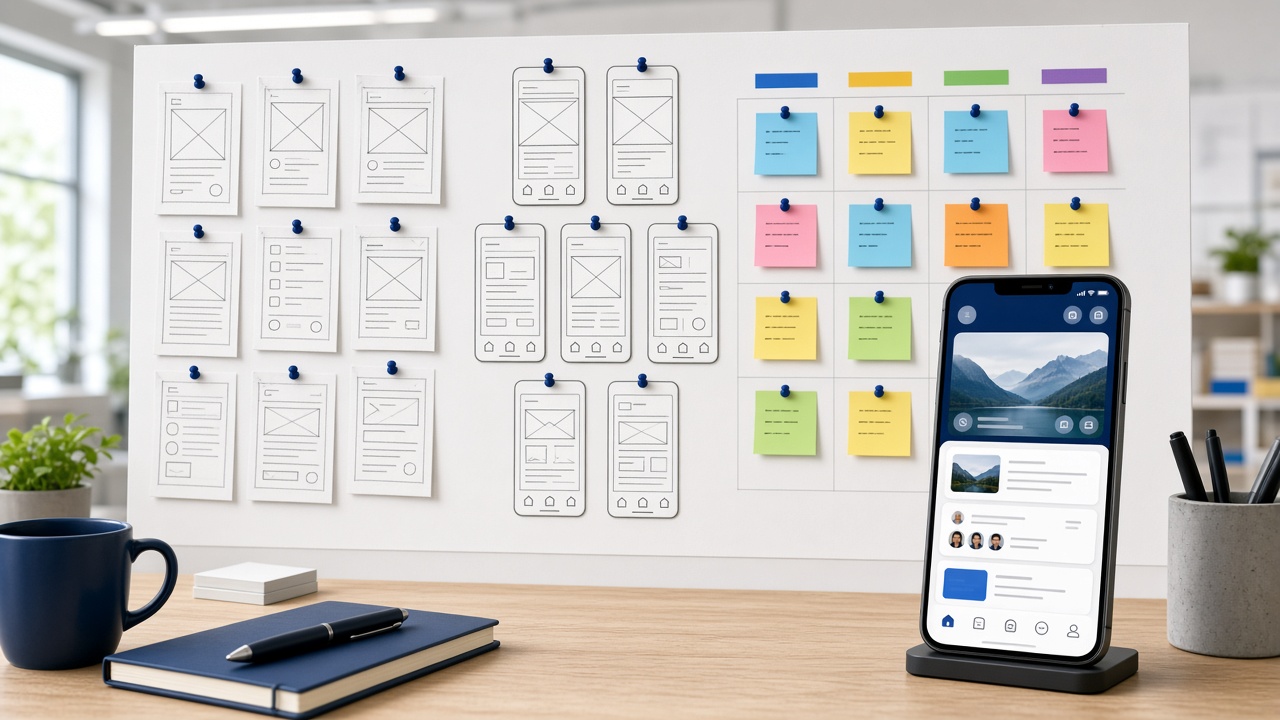
Consult and plan until the first release is boringly clear
Digital product development starts with constraints: users, deadline, integrations, and what success looks like in the business already. We turn that into a backlog the client can read. If a story cannot be demoed, it is not a story yet.
This is also when we choose website versus web app versus SaaS versus ecommerce platform. The process is the same shape. The artifacts change.
Design enough to build, not enough to stall
UI/UX should lock the primary flows and the brand signals that create trust. It should not become an infinite exploration. We prototype the risky interactions—onboarding, pricing, checkout, approvals—then move those into engineering with acceptance notes.
Content and empty states are design. A product that only looks finished with perfect sample data will feel broken on week one.
Build and manage in short, visible cycles
Agile only works if the increment is real. Each sprint should leave software in an environment the client can click. We keep architecture decisions written: why this database, why this auth, why this hosting. Future you will not remember the meeting.
Change is expected. Untracked change is how dates slip. A product owner—client side or ours—ranks the backlog. Engineering does not silently expand scope to make a screen prettier.
- Sprint goal stated in user language
- Demo on a URL the client can open
- Risks listed with an owner
- Release notes even for small drops
Launch and scale as a planned phase
Launch includes migration, monitoring, and a support window. Scale includes performance work you do because usage appeared, not because a blog post said you needed Kubernetes. We harden what the first users stress.
If your internal team can run this cadence but needs a steward, project management consulting can install it without replacing your engineers. If you need the engineering too, product development and delivery stay under one conversation.
Related services
Continue reading




Swipe to continue reading
Want help applying this to your product?
Talk through your software, SaaS, ecommerce or AI requirement with the PKT Info Tech team.